
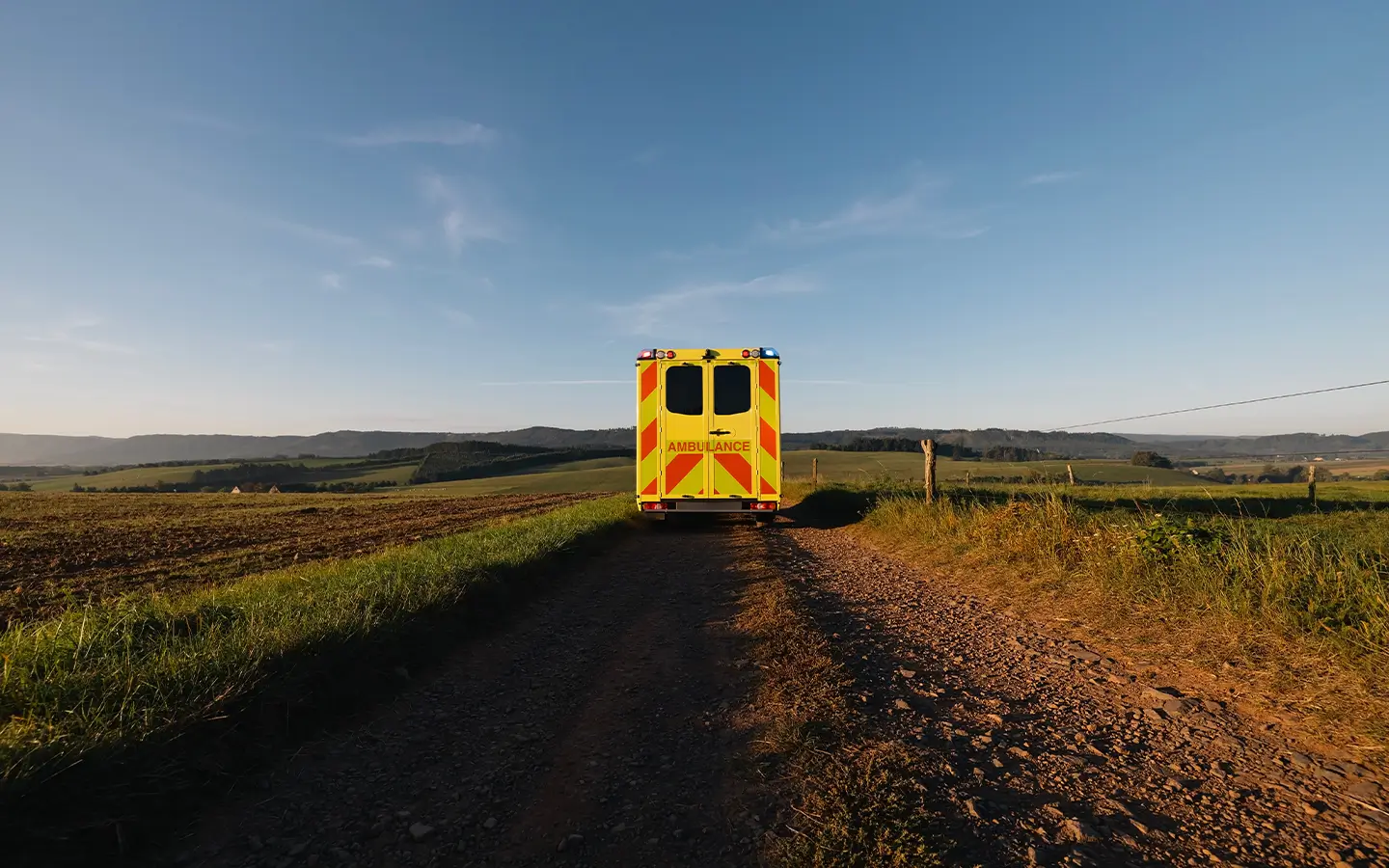
Bridging Critical Care Gaps in Remote and Field Medicine
BRITE Institute is utilizing emerging technologies to improve specialist care in remote, rural, military, and disaster settings. The project focuses on environments where conventional healthcare infrastructure is unavailable, damaged, delayed, or difficult to reach. Its goal is to identify high-priority problems, evaluate practical technological solutions, and develop free-to-use tools that remain safe and useful under real operational constraints.
What is this project about?
BRITE Institute is exploring how emerging technologies—including artificial intelligence, offline clinical decision-support systems, portable diagnostics, and resilient communication tools—can improve care in remote, rural, military, and disaster settings.
The project focuses on environments where conventional healthcare infrastructure is unavailable, damaged, delayed, or difficult to reach. Its goal is to identify high-priority problems, evaluate practical technological solutions, and develop tools that remain safe and useful under real operational constraints.
Why is this important?
Patients in remote, rural, military, and disaster settings often need care without access to the infrastructure available in a major hospital.
Clinicians may be unable to obtain timely laboratory tests, imaging, or specialist consultation. Biological samples may need to travel long distances over damaged roads or unreliable transport networks. Patients may deteriorate while waiting for evacuation, yet transport capacity may be limited, dangerous, or reserved for the most urgent cases.
Medical personnel may also be required to manage conditions beyond their usual expertise. A rural clinician may have no immediate access to a radiologist or critical-care specialist. A military medic may need to care for a severely injured patient for hours or days before evacuation. Disaster-response teams may be treating many patients with limited staff, incomplete records, and rapidly changing information.
These environments commonly involve:
- Limited or nonexistent laboratory and imaging facilities
- Delays in transporting patients and diagnostic samples
- Shortages of specialists and experienced clinicians
- Unreliable internet, power, and communication networks
- Incomplete or inaccessible patient records
- Limited medications, equipment, blood products, and supplies
- Long transport and evacuation times
- Difficult decisions about which patients require immediate transfer
- High clinical workloads and limited time for decision-making
- Environmental, security, and infrastructure constraints
Emerging technologies may help overcome some of these barriers.
Offline AI support systems can provide critical guidance in disaster zones, while specialist AI systems can guide care when specialists are lacking. AI controlled drones can transport critical samples to major hospitals, while centralized AI learning systems improve logistics and remote treatment protocols.
Where can it be applied?
1. Rural and Remote Healthcare
Remote clinics and small hospitals may lack immediate access to specialists, laboratories, advanced imaging, or critical-care resources. Emerging technologies can support diagnosis, specialist diagnositics and treatment, referral, and monitoring while reducing unnecessary patient transfers.
2. Military and Operational Medicine
Military medics and field clinicians may need to provide prolonged field care during delayed evacuation, disrupted communications, or prolonged operations. Offline decision support, portable diagnostics, and remote consultation tools may help extend care beyond the initial stabilization period.
3. Disaster Response
Earthquakes, floods, fires, conflict, and other disasters can damage healthcare infrastructure and overwhelm available services. Technology can support triage, diagnosis, and care in environments with limited resources and no internet.
4. Humanitarian and Conflict-Zone Medicine
Humanitarian organizations often work in environments with limited infrastructure, disrupted supply chains, and restricted access to specialist care. Low-resource technologies may improve diagnostic capacity, continuity of care, and coordination between local and international teams.
5. Emergency Medical Services and Prolonged Transport
Ambulance crews and other prehospital providers may face long transport times or delayed access to definitive care. Decision-support and monitoring systems can help identify deterioration, prioritize interventions, and communicate essential information to receiving facilities.
6. Offshore, Aviation, and Expedition Medicine
Ships, aircraft, research stations, wilderness expeditions, and other isolated environments may be unable to access immediate medical support. Offline clinical tools and remote consultation can help non-specialist personnel manage illness or injury until evacuation is possible.
What are this results?
This project is currently in the exploratory and scoping phase.
This initial work includes identifying high-priority clinical and operational problems through literature review, expert consultation, field experience, and collaborating with clinicians working in remote, rural, military, and disaster environments.
Future will may focus on a smaller number of high-impact applications, such as offline clinical decision support, prolonged field care, rural diagnostic support, medical evacuation decisions, portable testing, or low-bandwidth specialist consultation.
The long-term objective is to help create technologies that are not merely innovative in ideal conditions, but dependable when infrastructure is limited, expert support is distant, and patients cannot afford for the system to fail.

Research You Can Rely On
Did you know that many research findings are manipulated—or even outright false? Some estimates suggest that up to 90% of published research may be unreliable. Meanwhile, more than $167 billion in taxpayer money is spent annually on research and development.
At BRITE Institute, we believe research should do more than just look credible. It should be credible. That’s why we go above and beyond typical standards with rigorous practices that ensure honesty, transparency, and accuracy at every step. Below are just some of the ways we safeguard the integrity of our work:

Honest Statistics
BRITE Institute never p-hacks or manipulates data to achieve a desired outcome. If a paper relies on complex statistical analyses, we use an external statistician to ensure objectivity and validity.

Open and Transparent
BRITE Institute prioritizes transparency at every stage of the research process. Whenever possible, we publish our full data sets and use open access publishing.

Impact Centered
BRITE Institute does not publish for the sake of publishing. Our research is built with end-users in mind—whether it’s policy-makers, engineers, or community leaders—ensuring that findings are not only trustworthy but also actionable.